
Table of Contents
- 15-Yard vs 20-Yard Dumpster: Quick Comparison
- 15-Yard Dumpster Dimensions and Specifications
- 20-Yard Dumpster Dimensions and Specifications
- What Fits in a 15-Yard Dumpster: Projects and Debris Types
- Projects That Need a 20-Yard Dumpster
- 15-Yard vs 20-Yard Dumpster Cost and What to Expect
- How to Choose the Right Size for Your Project
- Common Sizing Mistakes and How to Avoid Them
- Frequently Asked Questions
Last Updated: October 7, 2026
15-Yard vs 20-Yard Dumpster: Quick Comparison
When you’re planning a major renovation, roof replacement, or home cleanout, choosing between a 15-yard vs 20-yard dumpster often comes down to one question: will my debris fit? The difference might seem small on paper, but it translates directly to whether you’ll need a second rental or have capacity to spare.
We work with homeowners and contractors across Central Texas every day who face this exact decision. A 15-yard dumpster works beautifully for single-room remodels and moderate cleanouts. A 20-yard dumpster handles larger projects, multi-room renovations, significant roof tear-offs, and whole-house decluttering. Understanding the actual dimensions, weight limits, and what each size holds is what separates a smooth project from an expensive surprise.
Let’s walk through the specifics so you can make the right call for your situation.
Comparison Table: Dimensions, Capacity & Weight Limits
| Specification | 15-Yard Dumpster | 20-Yard Dumpster |
|---|---|---|
| Length | 16 feet | 22 feet |
| Width | 8 feet | 8 feet |
| Height | 4.5 feet | 4.5 feet |
| Usable Capacity | 15 cubic yards | 20 cubic yards |
| Typical Weight Limit | 6,000 lbs | 8,000 lbs |
| Approximate Truck Loads | 4-5 pickup trucks | 6-7 pickup trucks |
| Best For | Single rooms, small cleanouts | Multi-room projects, large debris |
15-Yard Dumpster Dimensions and Specifications
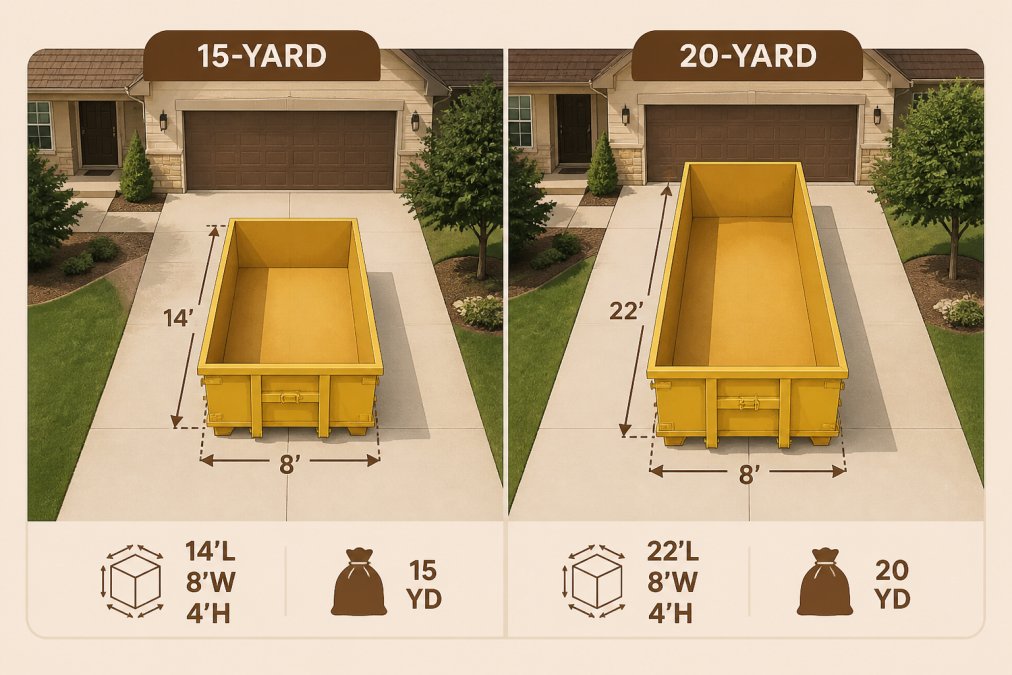
A 15-yard dumpster measures 16 feet long, 8 feet wide, and 4.5 feet tall. That translates to 15 cubic yards of usable space, roughly equivalent to four to five full pickup truck beds of debris.
The footprint is compact enough that most residential driveways can accommodate it without major logistics headaches. The 16-foot length fits comfortably in most standard driveways, and the 4.5-foot height means low-hanging branches or garage overhangs rarely become obstacles. Weight limits typically sit around 6,000 pounds, which covers most household debris: drywall, flooring, furniture, yard waste, and general junk.
The key constraint with a 15-yard dumpster isn’t usually the floor space, it’s the height. Once you load it to the rim, you’re done. Overfilling triggers extra fees at most rental companies, so pacing your loading matters.
Stack heavy items (concrete, metal) on the bottom and lighter debris (insulation, cardboard) on top. This maximizes what you can fit and keeps you under weight limits longer.
20-Yard Dumpster Dimensions and Specifications
A 20-yard dumpster stretches 22 feet long, 8 feet wide, and 4.5 feet tall, that extra 6 feet of length is where the additional capacity lives. You get 20 cubic yards, equivalent to roughly six to seven pickup truck loads.

The longer footprint requires more driveway real estate. If your driveway is tight or has sharp angles, a 20-yard dumpster might not fit. Weight limits typically max out around 8,000 pounds, giving you breathing room for heavier debris mixes, roofing materials, concrete chunks, or dense construction waste.
The 20-yard dumpster is the popular all-rounder for renovation projects. It’s large enough to handle most multi-room jobs without overflow, but not so massive that it dominates a residential property or requires special permitting in most areas.
The difference between 15-yard and 20-yard dumpsters is primarily length: 22 feet versus 16 feet. Both are 8 feet wide and 4.5 feet tall. The extra 6 feet of length adds roughly 33% more capacity.
What Fits in a 15-Yard Dumpster: Projects and Debris Types
A 15-yard dumpster handles single-room renovations comfortably. Kitchen remodels, bathroom overhauls, or bedroom flooring replacements typically generate 8 to 12 cubic yards of debris.
Home cleanouts work well in this size too, particularly when you’re clearing one or two rooms of accumulated household junk, old furniture, and general clutter.
Smaller roofing projects also fit. If you’re re-roofing a garage or a single-story section of your house, a 15-yard dumpster usually suffices.
Yard waste and landscaping debris, branches, stumps, mulch, soil, fill a 15-yard dumpster quickly because of volume, not weight. A major tree removal or landscape overhaul might push you close to the rim.
The debris types that work best: drywall scraps, flooring (tile, laminate, hardwood), insulation, trim, cabinet pieces, old fixtures, general household junk, and light construction waste.
Heavy debris like concrete, bricks, or asphalt can max out your weight limit before you fill the dumpster by volume. If your project involves demolition of concrete patios or brick structures, ask about weight restrictions upfront, you might need a 20-yard dumpster even if the volume seems small.
Projects That Need a 20-Yard Dumpster
A 20-yard dumpster is your choice for multi-room renovations. Kitchen plus bathrooms plus flooring across three rooms? That’s easily 15 to 20 cubic yards.
Whole-house cleanouts almost always call for a 20-yard dumpster. When you’re emptying an estate, clearing out a rental property after tenants leave, or downsizing a full residence, 15 cubic yards rarely cuts it.
Major roofing projects, re-roofing a two-story house or replacing the entire roof on a single-story home, produce substantial debris. Shingles, underlayment, wood sheathing, and flashing all add up.
Significant demolition and renovation projects, gutting a kitchen and bathrooms simultaneously, or major structural work, generate the volume that makes a 20-yard dumpster the safer bet.
Deck removal, large tree stumps, and extensive landscaping overhauls also fit the 20-yard category. The volume of branches, mulch, and soil can surprise you.
15-Yard vs 20-Yard Dumpster Cost and What to Expect
Rental pricing varies based on your location, rental period, debris type, and delivery distance. Dumposaurus offers transparent, upfront pricing, no hidden fees for delivery, landfill, or administrative charges. You see the total cost before you commit.
Generally, a 15-yard dumpster costs less than a 20-yard because it requires less haul-away weight and disposal.
What matters more than the base rate is what’s included. Some rental companies charge extra for delivery, pickup, weight overages, or disposal of certain materials. Dumposaurus includes delivery and pickup in our quoted price, so there’s no surprise bill when the dumpster leaves your property.
If your project might generate 18 cubic yards of debris, renting a 15-yard dumpster and paying overage fees often costs more than simply renting a 20-yard from the start.
Homeowners in Austin and Central Texas managing single-room remodels, small cleanouts, or modest roofing projects benefit most from 15-yard dumpster pricing. Contractors handling multiple jobs per month often lock in recurring rates with Dumposaurus for predictable cost management.
How to Choose the Right Size for Your Project
Start by estimating your debris volume. The simplest method: think in pickup truck loads. A full pickup truck bed holds roughly 3 cubic yards. If your project will generate four to five truck loads, a 15-yard dumpster works.
For renovations, break it down by room. A single-room kitchen remodel typically produces 8 to 12 cubic yards. Add bathrooms or flooring, and you’re climbing toward 15 to 20 cubic yards quickly.
Ask yourself: am I demolishing, renovating, or cleaning out? Demolition (gutting walls, removing fixtures) generates more volume than renovation (installing new materials). Cleanouts vary wildly depending on how much you’re discarding.
Consider the debris type. Heavy material like concrete or brick takes up less volume but more weight. Light material like insulation or drywall fills space fast but weighs less.
Weight Limits and Material Restrictions
Every dumpster has a weight limit, and exceeding it costs money. A 15-yard dumpster typically maxes out at 6,000 pounds; a 20-yard at 8,000 pounds. These aren’t suggestions, they’re structural and legal limits for safe hauling.
Materials matter too. Most dumpster rentals accept general household junk, construction debris, and yard waste. Restrictions typically include hazardous materials (paint, batteries, chemicals), appliances with refrigerant, tires, and electronics. We can advise on specific restrictions for your debris type, just ask when you call or text.
If your project involves heavy demolition, concrete removal, brick work, or asphalt, confirm weight allowances upfront. A cubic yard of concrete weighs roughly 1.5 tons. If you’re removing a patio, the weight adds up fast, and you might max out a 15-yard dumpster’s weight limit before filling it by volume.
Placement, Permits, and Driveway Safety
Most residential driveways in Austin don’t require a permit for a dumpster rental. Dumposaurus handles placement on private property without permit hassles, which saves you time and paperwork.
That said, driveway condition matters. Older concrete or asphalt can crack under the weight of a loaded dumpster. If your driveway is already compromised, mention it when you order. We can place plywood or mats underneath to distribute weight and protect your surface.
For a 15-yard dumpster, you need roughly 16 feet of clear, level driveway space. A 20-yard requires 22 feet. Measure twice before booking, tight spaces can complicate delivery. Our drivers are experienced with Austin’s varied lot layouts, but knowing your exact space upfront prevents delays.
Common Sizing Mistakes and How to Avoid Them
The most frequent mistake is underestimating volume. Homeowners book a 15-yard dumpster, start demolition, and realize by day two that they need more space.
Another mistake: confusing cubic yards with square footage. A 15-yard dumpster doesn’t hold 15 square feet of debris, it holds 15 cubic yards, which is a volume measurement.
Underestimating weight is another pitfall.
The fix: when in doubt, size up. The cost difference between a 15-yard and 20-yard is modest compared to the cost of a second rental or overage charges.
One final mistake: not asking about material restrictions. Some debris types, treated wood, certain roofing materials, or hazardous waste, have disposal fees or cannot go in standard dumpsters.
Choosing between a 15-yard vs 20-yard dumpster comes down to your project scope and debris volume. A 15-yard handles single-room renovations and modest cleanouts.
Frequently Asked Questions
How much debris can a 15-yard dumpster hold?
A 15-yard dumpster holds approximately 15 cubic yards of debris, which equals roughly 45-50 pickup truck loads or 450-500 trash bags. The actual amount depends on how densely you pack the container and the weight of your debris. Lighter materials like drywall or yard waste fill the space faster by volume, while heavier items like concrete or roofing material may hit the weight limit before the container appears full.
When should I choose a 20-yard dumpster instead of a 15-yard dumpster?
Choose a 20-yard dumpster for larger projects like whole-home renovations, multi-room remodels, extensive demolition work, or major cleanouts spanning multiple areas. A 20-yard dumpster holds about 33% more volume than a 15-yard and handles heavier debris loads. If your project involves roofing, flooring, or structural demolition across more than one room, a 20-yard dumpster typically prevents overage fees and the need for a second rental.
What’s the difference in 15-yard vs 20-yard dumpster cost?
Pricing depends on your location, rental period, delivery timing, and weight limits. Dumposaurus offers transparent upfront pricing with no hidden fees for delivery, pickup, or standard disposal. Contact us for a free quote tailored to your specific project. Generally, the cost difference reflects the additional capacity and weight allowance, but a single 20-yard rental often costs less than renting two 15-yard containers if your project grows.
Will a couch fit in a 15-yard dumpster?
Yes, a standard couch fits easily in a 15-yard dumpster. Most furniture pieces, including couches, sectionals, and bed frames, take up minimal volume relative to the container’s 15 cubic yards. A 15-yard dumpster works well for single-room or multi-room home cleanouts where furniture is mixed with other household junk. Verify your rental includes furniture disposal, as some materials may have restrictions.
Do I need a permit to place a dumpster in my driveway?
In most residential areas, you do not need a permit to place a dumpster on your private driveway. However, permit requirements vary by location and local codes. Dumposaurus handles the details and can advise whether your specific address requires a permit. If your dumpster must sit on the street or in a shared area, a permit may be required. Contact us before scheduling delivery to confirm local requirements for your project.
What happens if my dumpster overflows or exceeds the weight limit?
Overflowing a dumpster or exceeding weight limits typically results in additional fees from your rental provider. To avoid this, Dumposaurus helps you choose the right size upfront based on your project scope. If your project grows unexpectedly, we can often upgrade to a larger container or arrange a second delivery rather than face overage charges. Always discuss project details with us so we recommend the size that fits your actual needs.
How quickly can Dumposaurus deliver and pick up a dumpster?
Dumposaurus offers same-day or next-day delivery for most projects in the Austin and Central Texas area. We also provide fast pickup when your project finishes early, so you don’t pay for unused rental time. Our family-owned service prioritizes reliability and flexibility, with real people answering your calls to coordinate timing. This responsiveness sets us apart and keeps your project moving without unnecessary delays or costs.