
Table of Contents
- How Far in Advance to Book a Dumpster
- Create a Dumpster Rental Scheduling Checklist
- Coordinate Pickup with Your Project Timeline
- What Delays Dumpster Pickup and How to Prevent Them
- How to Extend a Dumpster Rental
- Confirm Your Pickup Schedule and Communicate Changes
- Avoid Hidden Fees and Extra Charges
- Frequently Asked Questions
Last Updated: October 5, 2026
How Far in Advance to Book a Dumpster
Booking early is the foundation of reliable dumpster pickup scheduling. The earlier you plan, the better your chances of getting the exact delivery and pickup dates you need.
Booking timeline for residential projects
For residential projects, book your dumpster at least 3-7 days in advance. This gives your rental company time to confirm availability and coordinate logistics.
A short booking window limits your options: you might not get your preferred delivery date, and rushed scheduling can conflict with your project timeline.
Contact your provider as soon as you know your project start date. At Dumposaurus, we can often accommodate same-day or next-day delivery for residential cleanouts and renovations, but confirming early removes last-minute stress.
Key timeline markers:
- 2-3 weeks out: ideal for peak season bookings
- 1-2 weeks out: standard for most residential projects
- 3-7 days out: minimum for standard scheduling
- Same-day/next-day: available but with limited flexibility on timing
Booking timeline for commercial jobs
Commercial projects require more notice. Book 2-4 weeks ahead for construction sites, demolition, or large-scale waste removal. Recurring pickups must be coordinated with job schedules and crew availability.
Commercial jobs involve multiple stakeholders, and scheduling conflicts can delay entire projects if dumpster pickup isn’t aligned with construction phases.
For ongoing commercial contracts, establish your rental schedule at the start of the project to lock in consistent pickup days and prevent service gaps. If your timeline shifts, notify your provider immediately so adjustments can be made without interruptions.
Create a Dumpster Rental Scheduling Checklist
A scheduling checklist ensures nothing gets missed before delivery and pickup days, preventing delays, missed appointments, and last-minute scrambling.
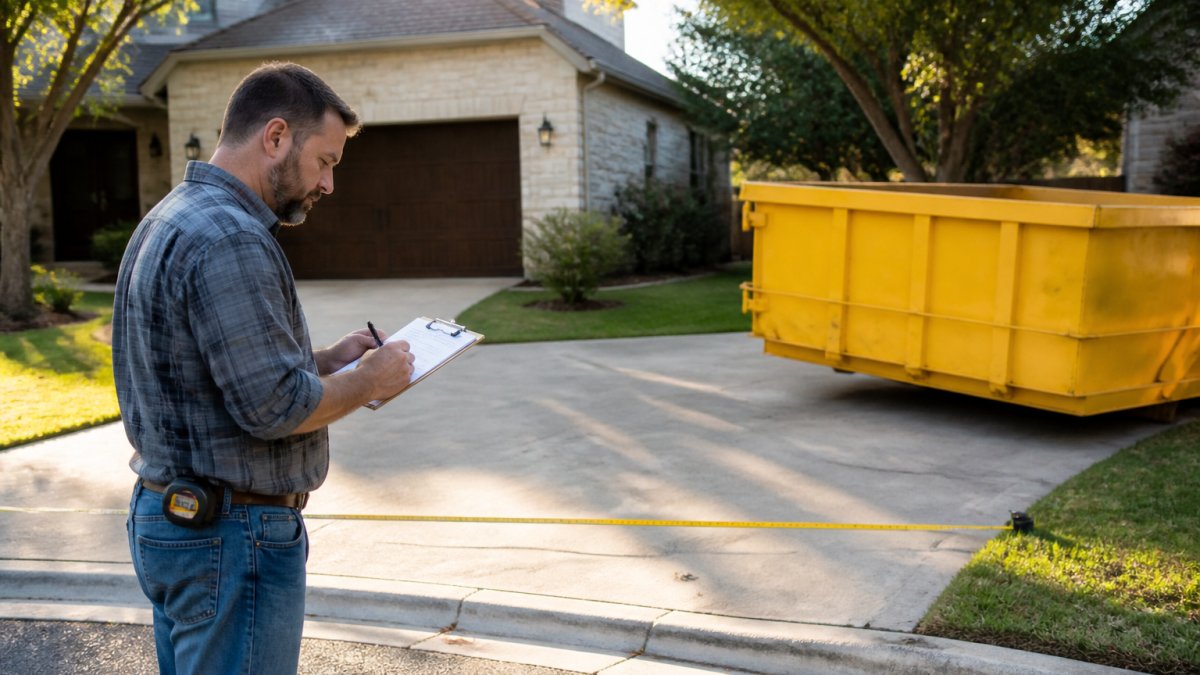
Pre-delivery preparation
Before your dumpster arrives, clear the placement area of obstacles and parked vehicles, and check for overhead power lines or low-hanging branches that could interfere with delivery.
Confirm your address and access details with your provider, mentioning tight spaces, gates, or unusual conditions, and specify where you need the dumpster placed.
Verify that your property allows dumpster placement. Most residential properties don’t require permits for temporary rentals on private driveways, but confirm locally before delivery day.
Pre-delivery checklist:
- Clear the placement area of vehicles and obstacles
- Confirm the exact address and access instructions
- Check for overhead hazards (power lines, branches)
- Verify no permits are required
- Know your dumpster size and rental period
- Have your confirmation number ready
Pickup-day readiness
On pickup day, make sure the area around the dumpster is clear and accessible to the truck without obstacles.
Confirm your pickup appointment the day before with a quick call or text so the driver has the correct time and location, preventing missed pickups that add extra rental costs.
Be present at pickup if possible to verify the dumpster is removed and the area is clean. Photograph the pickup if you’re concerned about property damage.
Pickup-day checklist:
- Clear the area around the dumpster
- Confirm pickup time the day before
- Be available during the pickup window
- Verify the dumpster was removed
- Check for any damage to your property
Coordinate Pickup with Your Project Timeline
Timing your rental to match actual project needs prevents overpaying for unused days. Align your pickup schedule with when waste will actually be generated.

Matching service frequency to waste volume
Estimate how much debris your project will produce.
Match rental duration to your waste production timeline. If your project runs 3 weeks but heavy debris only appears in the first week, consider a shorter rental with a potential extension to avoid paying for unused days.
Some projects benefit from multiple pickups. A long renovation might need the dumpster swapped out midway when it fills. Discuss this upfront with your provider for continuous-waste projects.
Waste volume considerations:
- Small projects (1-3 days of debris): 5-10 yard dumpster, 1-week rental
- Medium projects (1-2 weeks of debris): 10-15 yard dumpster, 2-week rental
- Large projects (3+ weeks of debris): 20-30 yard dumpster, 4-week rental or multiple exchanges
Planning for different project types
Different projects have different waste generation patterns. Understand your project type to schedule pickup correctly.
Renovation projects produce steady waste throughout the timeline. Drywall, flooring, cabinets, and fixtures are removed gradually.
Roofing and demolition projects generate heavy debris quickly as shingles, wood, and metal accumulate fast. You might need a larger dumpster or shorter rental period to avoid overfilling.
Cleanout projects vary widely.
Commercial construction projects often run longer, and multiple phases mean varying waste generation. Recurring pickups or dumpster exchanges prevent service gaps.
What Delays Dumpster Pickup and How to Prevent Them
Most pickup delays are avoidable with proper planning and communication.
Common delay factors
Weather can delay pickups. Heavy rain, snow, or ice makes access difficult and unsafe, potentially pushing pickups back a day or two.
Site access issues cause delays.
Overfilled dumpsters can’t be picked up safely.
Communication breakdowns lead to missed pickups. If your phone number is wrong or your address is unclear, the driver might not find you.
Scheduling conflicts happen when project timelines shift. If your work finishes early or runs late, your pickup date might no longer fit.
Prevention steps:
- Keep the dumpster area clear and accessible
- Don’t overfill the dumpster
- Verify your contact information and address
- Monitor weather forecasts for potential delays
- Communicate project timeline changes immediately
Contingency planning for unexpected delays
Have a backup plan if your pickup gets delayed. Know the cost of extending your rental for an extra day or two.
If a pickup is missed, contact your provider right away. Don’t wait. The sooner you report it, the sooner they can reschedule. Most providers prioritize missed pickups.
For weather-related delays, be flexible. Pickup might shift by a day during storms. Have a plan for managing waste temporarily if your pickup is delayed.
If your project timeline shifts, communicate immediately. Your provider can adjust your pickup date to match your new schedule.
Contingency planning checklist:
- Know the cost of a 1-day rental extension
- Have your provider’s phone number readily available
- Monitor weather forecasts during your rental period
- Have temporary waste management options ready
- Confirm pickup 24 hours in advance
How to Extend a Dumpster Rental
Sometimes your project takes longer than expected. Extending your dumpster rental is straightforward and often more cost-effective than renting a second container.
When to request an extension
Request an extension as soon as you realize you need more time. Don’t wait until your pickup date arrives.
Extensions make sense when your project runs longer than planned. Unexpected complications, weather delays, or additional work can extend timelines.
If your dumpster is nearly full and you have more waste to remove, an extension is better than overfilling. Overfilled dumpsters create safety and liability issues.
For ongoing projects, discuss extension options upfront. Some providers offer flexible rental periods or automatic extensions. Knowing your options prevents last-minute scrambling.
Extension process and what to expect
Contact your provider and request an extension. Provide your rental confirmation number and desired extension length.
Expect to pay for the extension period. Pricing is usually prorated based on the number of additional days. Ask for the exact cost before confirming.
The dumpster stays in place during the extension. You don’t need to do anything special. Just continue using it as normal.
Confirm your new pickup date once the extension is approved. Mark it on your calendar. Notify anyone involved in your project of the schedule change.
Extension timeline:
- Request extension 2-3 days before current pickup date
- Confirm pricing and new pickup date
- Receive written confirmation of extension
- New pickup date is scheduled and confirmed
Confirm Your Pickup Schedule and Communicate Changes
Clear communication prevents missed pickups and scheduling conflicts. Confirm your schedule and report changes immediately.
Confirmation best practices
Confirm your pickup appointment 24-48 hours before the scheduled date. A quick call or text ensures everything is locked in.
Keep your confirmation number accessible. Save it in your phone or write it down. You’ll need it if you need to contact your provider about your rental.
Request a confirmation email or text with your pickup details. This creates a record you can reference. It also ensures your contact information is correct.
If you have any special instructions, mention them during confirmation. Let your provider know about tight access, low-hanging obstacles, or unusual site conditions.
Notifying your provider of schedule changes
If your project timeline changes, notify your provider immediately. Don’t wait until pickup day.
Provide specific information about the change. Is your project finishing early? Running late? Will you need an extension or earlier pickup?
Confirm the new pickup date in writing. Get a confirmation number for the revised schedule. This prevents confusion and ensures everyone is aligned.
For recurring commercial pickups, establish a communication protocol upfront. Know who to contact, how to reach them, and how much notice they need for schedule changes.
Communication best practices:
- Confirm pickup 24-48 hours in advance
- Report schedule changes immediately
- Provide specific details about changes
- Get written confirmation of new dates
- Keep confirmation numbers and contact info handy
Avoid Hidden Fees and Extra Charges
Understanding your rental agreement prevents surprise costs. Know what’s included and what costs extra.
Understanding weight limits and overage fees
Most dumpster rentals include a weight limit. Common limits range based on dumpster size. Exceeding the weight limit triggers overage fees.
Heavy materials like concrete, dirt, and roofing shingles add significant weight quickly. Know what materials you’re disposing of. Some materials are heavier than others.
Ask your provider about the weight limit for your dumpster size. Understand the overage fee structure.
If you’re unsure about weight, estimate conservatively. It’s better to get a larger dumpster than to face surprise overage charges.
Weight limit considerations:
- Standard weight limits vary by dumpster size
- Heavy materials exceed limits faster
- Overage fees apply per ton over the limit
- Larger dumpsters often have higher weight allowances
- Ask about weight limits before booking
Transparent pricing and upfront clarity
Request an itemized quote before booking. Know what’s included: delivery, pickup, rental period, and weight allowance. Know what costs extra: extensions, overages, and additional services.
Ask about all potential fees. Delivery fees, landfill fees, and administrative fees should be disclosed upfront.
Get your quote in writing. Review it carefully. Ask questions about anything unclear. A written quote protects you and your provider.
Compare quotes from multiple providers if possible. But focus on total cost, not just the base rental price.
Pricing clarity checklist:
- Get itemized quote in writing
- Confirm delivery and pickup costs
- Know weight limits and overage fees
- Ask about extension costs
- Confirm rental period and included days
- Verify no hidden administrative fees
*Reliable dumpster pickup scheduling comes down to planning ahead, clear communication, and understanding your rental agreement.
Frequently Asked Questions
How far in advance should I book a dumpster rental?
Book at least 3-5 days ahead for residential projects; 1-2 weeks is ideal for larger renovations or if you need a specific delivery window. Commercial jobs and demolition work should be scheduled 2-4 weeks in advance to ensure availability and allow time for site assessment. Last-minute bookings are sometimes possible, but advance booking guarantees your preferred delivery date and pickup schedule.
What should I do if my dumpster is full before the scheduled pickup?
Contact your provider immediately—don’t overfill the container, as that can trigger overage fees or safety violations. You have two options: request an early pickup (if available), or arrange a dumpster exchange for a second container. Many providers offer flexible scheduling to accommodate unexpected debris volume, so communicate your situation as soon as you notice the dumpster filling faster than expected.
Can I change my dumpster pickup date?
Yes, most providers allow schedule changes with advance notice. Contact your company at least 24-48 hours before your scheduled pickup to request a new date. Changing your pickup schedule is typically free if done in advance, but last-minute changes or frequent rescheduling may incur fees. Always confirm the new pickup window in writing to avoid missed pickups.
What are the most common reasons dumpster pickups get delayed?
Weather, traffic, site access issues, and overweight containers are frequent causes. Delays also occur when the dumpster is blocked by vehicles, debris is stacked unsafely, or the placement area is inaccessible. To minimize delays, clear the area around your dumpster, ensure access from the street, confirm your address and phone number are correct, and notify your provider immediately if conditions change before pickup day.
EPA guidelines on construction and demolition waste disposal
OSHA standards for jobsite safety and waste management
National Association of Waste Transporters industry best practices