
Table of Contents
- Why Dumpsters Can Damage Driveways
- What to Put Under a Dumpster to Protect Your Surface
- Can a Dumpster Crack Your Driveway? Understanding the Risk
- Dumpster Placement on Driveway: Best Practices
- How Long Can a Dumpster Stay in a Driveway?
- Step-by-Step Driveway Protection Setup
- Common Mistakes to Avoid
- Frequently Asked Questions
Last Updated: October 11, 2026
Why Dumpsters Can Damage Driveways
Heavy dumpsters pose real risks to driveways, which is why you should protect driveway dumpster placement with proper barriers.
A loaded roll-off dumpster weighs thousands of pounds, creating concentrated pressure asphalt and concrete weren’t designed to handle. Longer placement increases risk.
Damage often occurs slowly beneath the surface, cracks form, foundations weaken, and costly repairs become necessary.
The good news: damage is preventable with proper protection and setup.
What to Put Under a Dumpster to Protect Your Surface
The right protective barrier is your first line of defense. Different materials work better depending on your driveway type and the weight of the dumpster you’re renting.
Plywood and Lumber Options
Plywood is the most common and affordable protection method. Use 3/4-inch plywood sheets laid directly on your driveway. The thicker plywood distributes the dumpster’s weight across a larger area, reducing pressure on any single spot.
Plywood spreads weight evenly, creates a barrier between wheels and surface, costs less than mats, and works well for rentals under two weeks. For extra protection, layer 2×4 or 2×6 lumber boards perpendicular to the dumpster wheels underneath.
Plywood absorbs moisture and weakens when wet. Check regularly during rental and ensure water doesn’t pool underneath.
Overlap plywood sheets by at least 12 inches where they meet. This prevents the dumpster wheels from catching an edge and tearing the protective layer.
Rubber Mats and Specialized Dumpster Pads
Heavy-duty rubber mats offer better protection for longer rentals. They resist moisture, don’t degrade in wet conditions, feature reinforced construction rated for heavy loads, and last through multiple rentals.
Rubber mats work best for rentals longer than two weeks or unpredictable weather, costing more upfront but protecting better and lasting longer.
Cheap rubber mats may compress under weight and lose effectiveness. Invest in heavy-duty mats rated for at least 10,000 pounds per wheel. Low-quality mats can fail halfway through your rental period, leaving your driveway exposed.
Can a Dumpster Crack Your Driveway? Understanding the Risk
A dumpster can crack your driveway. Risk depends on driveway condition, dumpster size, rental duration, and environmental factors. New driveways handle placement better than older ones, but even strong driveways crack if unprotected long-term.

Asphalt, Concrete, Pavers, and Weakened Surfaces
Different driveway materials have different vulnerabilities, and those vulnerabilities shift based on conditions.
Asphalt compresses and deforms under pressure, showing permanent indentations. Risk intensifies in warm weather above 85°F when asphalt softens. Summer rentals are riskier than winter.
Concrete is brittle and cracks under pressure, especially if aging or already damaged. Strength decreases over time; a 20-year-old driveway is significantly weaker than a 5-year-old one.
Paver driveways are most vulnerable; pavers shift and crack under pressure. Repair costs $15-$25 per square foot versus $3-$8 for concrete.
Weakened or older driveways need extra protection. Use rubber mats instead of plywood if your driveway has cracks, is over 15 years old, shows wear, or has poor drainage.
Ground conditions matter as much as surface type. Soft or clay-heavy soil compresses under weight, causing uneven settling. Compromised ground causes dumpsters to sink, concentrating pressure and causing cracks.
Your driveway’s age, material, existing condition, and local weather all determine how much protection you need. Asphalt in summer heat, concrete with existing cracks, pavers on weak bases, and driveways in wet climates all require rubber mats or multiple layers of plywood. Newer driveways in good condition on well-drained ground can handle basic plywood protection for short rentals. When in doubt, choose the higher level of protection, the cost of mats is far less than repairing damage.
::: Proactive maintenance remains the most effective strategy for preventing asphalt damage, especially when addressing the surface vulnerabilities that lead to long-term structural degradation.
Dumpster Placement on Driveway: Best Practices
Where you place the dumpster matters as much as what you put under it, both are essential to protect driveway dumpster from damage. A poor placement choice can cause damage even with protective barriers in place.
Choose a flat, level location away from edges, corners, existing cracks, and weak areas. On sloped driveways, place the dumpster on the higher end to prevent water pooling. Avoid low spots and drains where moisture weakens protection.
Communicating Instructions to Your Delivery Driver
Provide clear placement instructions before delivery. Mark the location with chalk or cones, call Dumposaurus Dumpster Rental Austin to confirm, and be home to direct the driver. If unavailable, leave written instructions with a diagram and photo. Drivers default to convenient spots, not safe ones.
How Long Can a Dumpster Stay in a Driveway?
The longer a dumpster sits in one spot, the greater the risk of damage. But rental duration depends on your project timeline.
Plywood protects for up to two weeks; beyond that, protective value decreases. Heavy-duty rubber mats protect for up to four weeks. Concrete driveways in good condition can extend slightly longer than asphalt. Keep asphalt and weakened driveway rentals as short as possible.
If your project needs the dumpster longer than four weeks, ask about pickup and redelivery options. Removing the dumpster halfway through your project and replacing it later resets the damage clock and gives your driveway a break.
Step-by-Step Driveway Protection Setup
Protecting your driveway requires planning before delivery, monitoring during the rental, and inspection after pickup. The specifics of your setup depend on dumpster size, debris weight, driveway condition, and rental duration.
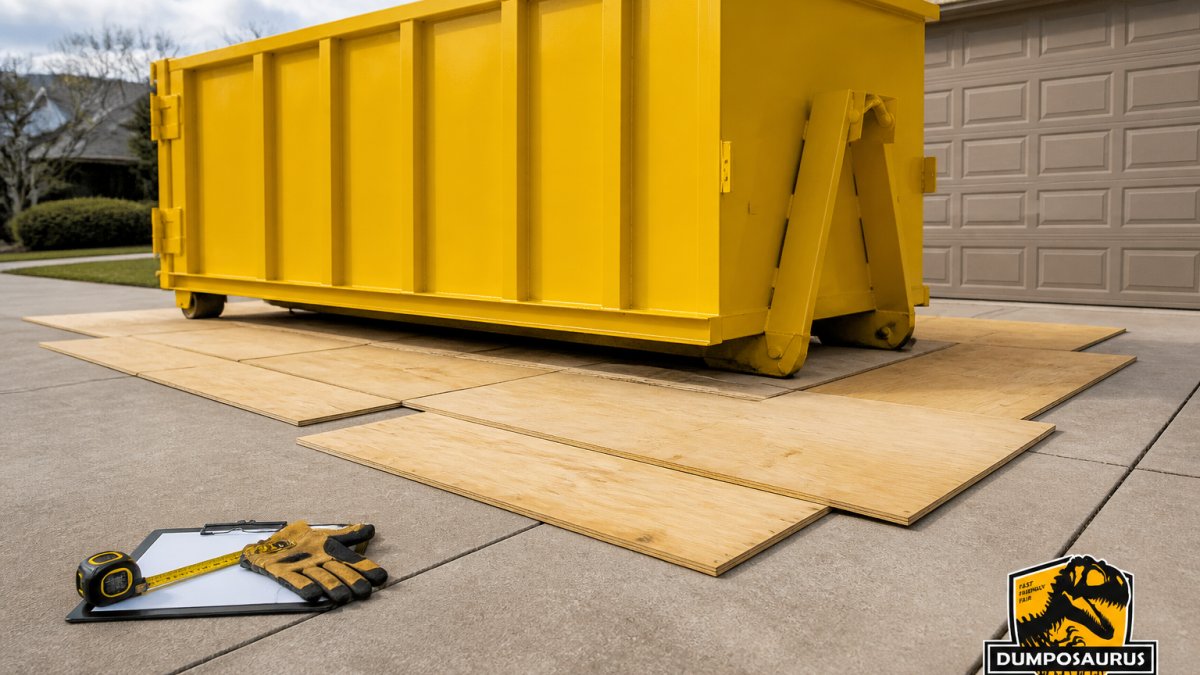
Before Delivery: Inspection and Material Selection
Inspect your driveway and document baseline condition with dated photos from multiple angles. Note existing cracks, soft spots, and weak areas.
Use 3/4-inch plywood for rentals under two weeks on good-condition driveways.
A 15-yard dumpster footprint is approximately 14×8 feet; a 20-yard is roughly 22×8 feet. Coverage should extend at least 2 feet beyond the footprint on all sides.
For maximum protection on older or asphalt driveways, lay 2×4 or 2×6 lumber boards perpendicular to wheels (spaced 2-3 feet apart), then plywood on top.
Remove loose debris, gravel, dirt, and leaves from the placement area. Allow wet or muddy ground to dry before laying protection, wet soil compresses more easily.
Arrange protective materials with at least 12-inch overlap where sheets meet to prevent wheels from catching edges.
- Mark the placement location clearly. Use chalk, spray paint, or traffic cones to show the delivery driver exactly where to place the dumpster. A simple diagram with arrows pointing to the protected area helps. If possible, mark the wheel contact points so the driver knows the dumpster must land squarely on the protection.
During the Rental Period: Active Monitoring
-
Check the barrier weekly for shifting, compression, or water pooling. Walk around the dumpster and look for gaps between sheets, visible compression of plywood, or water collecting underneath. Moisture is the enemy of protection, it weakens plywood and softens asphalt and concrete subgrades.
-
Clear water and debris immediately. If water pools under or around the dumpster, use a pump, wet-dry vacuum, or broom to remove it. In rainy climates, check more frequently. Standing water under a dumpster for more than a few days can cause visible damage to asphalt and weaken concrete.
-
Monitor for movement or settling. If the dumpster shifts, tilts, or appears to have sunk slightly into the driveway, contact your rental company immediately.
-
Avoid additional weight near the dumpster. Don’t place other heavy objects, vehicles, or equipment near the dumpster. Extra pressure compounds the damage risk and can cause the dumpster to shift.
-
Inspect after heavy rain or extreme heat. Heavy rain can saturate plywood and weaken its protective value. Extreme heat (above 90°F) can soften asphalt further. After these events, check for new pooling, compression, or visible marks.
After Pickup: Damage Assessment and Documentation
-
Inspect immediately after pickup, while protective materials are still in place. Don’t wait days. Check the driveway while you can see exactly what was protected and identify any new marks, indentations, or cracks. Some damage is easier to spot while the dumpster is being removed.
-
Look for indentations, cracks, discoloration, or soft spots. Run your hand across the surface to feel for depressions. Some damage takes time to become visible, check again after 2-3 days and again after one week, as cracks may widen slightly as the driveway settles.
-
Document any damage with photos and measurements. If cracks or significant indentations appear, photograph them with a date stamp and a ruler or coin in the frame for scale. Measure crack length and width. This documentation is essential if you need to file a claim with your rental company or your homeowner’s insurance.
-
Remove protective materials carefully to avoid secondary damage. Plywood and mats may stick to asphalt in hot weather or to wet concrete. Peel them back slowly and at a shallow angle to avoid tearing the driveway surface. If plywood is stuck, use a flat pry bar or shovel to gently lift edges rather than yanking.
-
Clean the area thoroughly. Sweep away dirt, debris, and any material fragments stuck to the driveway. Check for rubber residue from mats or splinters from plywood. Pressure wash if needed, but avoid high pressure on damaged or weakened areas.
-
Take final photos of the driveway in its post-rental condition. Document the overall condition, any new damage, and any areas that recovered well. Keep these photos with your rental agreement and insurance information.
If you discover cracks, significant indentations, or other damage after pickup, contact your dumpster rental company within 24-48 hours. Most rental companies have damage claim procedures with time limits. Provide your before and after photos as evidence.
Common Mistakes to Avoid
Learning from others’ errors prevents costly damage to your driveway.
Skipping protection entirely. Some renters think a short rental won’t cause damage.
Using thin plywood. Half-inch plywood bends and flexes under dumpster weight. It doesn’t distribute pressure effectively. Stick with 3/4-inch minimum.
Placing the dumpster on an already-damaged area. If your driveway has existing cracks or soft spots, keep the dumpster away.
Assuming the delivery driver knows the best spot. Drivers prioritize convenience, not driveway safety. Communicate your placement preference clearly.
Ignoring water pooling. Water trapped under a dumpster weakens both asphalt and concrete. Check for pooling regularly and remove it.
Leaving protective materials in place too long after pickup. Plywood left on asphalt in summer heat can stick or leave marks.
Renting a dumpster that’s too large. A 30-yard dumpster creates more pressure than a 20-yard. Choose the smallest dumpster that fits your project.
Frequently Asked Questions
Can a dumpster crack your driveway?
Yes, dumpsters can crack driveways if not properly protected. The combination of weight concentration and repeated stress from wheel pressure can cause cracks, especially on asphalt, older concrete, or weakened surfaces. A 30-yard dumpster weighs 10,000-16,000 pounds when loaded, and the front pads and wheels concentrate this force into small contact points. Using protective barriers like 3/4-inch plywood, rubber mats, or specialized dumpster pads significantly reduces this risk by distributing weight evenly across a larger surface area.
What should I put under a dumpster to protect my driveway?
The best protection depends on your driveway surface and rental duration. For short-term rentals (under 2 weeks), 3/4-inch plywood or 2×6 lumber works well for concrete driveways. For asphalt or longer rentals, heavy-duty rubber mats or polycarbonate skates provide superior protection against abrasion and pressure damage. Lay protective materials across the entire footprint of the dumpster, including under wheels, front pads, and rails. Ensure materials overlap slightly to prevent gaps where weight can concentrate.
How long can a dumpster stay in a driveway?
Longer durations increase risk of damage, especially during rain when ground softens and protective barriers compress. If your project takes longer than expected, contact your rental provider about extension options rather than letting the dumpster sit idle.
Where should a dumpster be placed to avoid driveway damage?
Place the dumpster on the flattest, most level section of your driveway to ensure even weight distribution. Avoid placement over cracks, seams, or soft spots in asphalt. If possible, position it away from the driveway’s edges to reduce stress on the perimeter. Clear the placement area of debris, gravel, and standing water beforehand. Communicate specific placement instructions to your delivery driver in advance, provide photos or mark the area with chalk or flags so the driver knows exactly where to position the container for maximum protection.
Protecting your driveway from dumpster damage is straightforward when you plan ahead. The right protective barrier, smart placement, and monitoring during the rental prevent costly repairs. Dumposaurus Dumpster Rental Austin provides driveway-safe dumpsters and can answer questions about the best setup for your specific project. Call The Beast of Clean-Up today to discuss your rental needs and get expert advice on driveway protection for your situation.