
Table of Contents
- What Makes a Dumpster Rental Service Reliable
- Roll-Off Dumpster Sizes Guide for Your Project
- Dumpster Rental Cost Estimate: Understanding Your Budget
- How to Prepare for Dumpster Delivery
- Accepted and Prohibited Materials
- Fast Delivery, Pickup, and Rental Flexibility
- Real People, Real Support: Customer Service That Shows Up
- Frequently Asked Questions
Last Updated: October 9, 2026
What Makes a Dumpster Rental Service Reliable
A reliable dumpster rental service keeps its promises about delivery timing, pricing transparency, and customer support.
Most people have experienced the frustration of a dumpster sitting in their driveway longer than expected. That’s the opposite of what you should get. A dependable dumpster rental service eliminates that stress by committing to specific pickup dates and standing behind those commitments.
What separates reliable providers from the rest comes down to three core factors: consistent delivery and pickup schedules, transparent pricing with no surprise fees, and real people who actually answer your calls.
Ask potential providers directly: “What happens if my project finishes early and I need pickup sooner?” Their answer tells you whether they prioritize customer flexibility or just their own schedule.
Roll-Off Dumpster Sizes Guide for Your Project
Choosing the right dumpster size prevents overfilling, eliminates surprise fees, and ensures your project stays on track. Roll-off dumpsters come in standard sizes, each designed for specific project types and debris volumes.
A 10-yard dumpster works well for small residential cleanouts and minor renovations. A 15-yard option suits medium kitchen or bathroom remodels. The 20-yard size handles larger home renovations and construction debris from significant projects.
The key is matching capacity to your actual debris volume, not guessing. Overflowing a dumpster creates safety hazards and triggers overage charges. Renting one size too large wastes money on unused space.
Residential Projects and Renovations
Home renovation projects generate specific types of debris, drywall, flooring, cabinets, fixtures. A kitchen remodel typically needs a 15-yard or 20-yard dumpster depending on scope. Bathroom renovations usually fit in a 10-yard or 15-yard container. Whole-house cleanouts and estate sales often require 20-yard capacity to handle furniture, appliances, and accumulated household items.
The timeline matters too. If your renovation will span four weeks, you need a dumpster that can handle two weeks of debris accumulation at a time, or a longer rental period with flexible pickup.
Contractor and Construction Debris
Construction sites generate heavier, bulkier debris, lumber, concrete, metal, roofing materials. These materials are denser than household waste, so a 20-yard or 30-yard dumpster fills faster by weight even if volume seems manageable. Contractors working on multiple jobsites benefit from reliable dumpster rental service providers who offer rapid delivery and pickup to keep projects moving.
Commercial and Business Cleanouts
Office relocations, warehouse cleanouts, and commercial space renovations require different planning. A retail store renovation might need a 20-yard dumpster for fixtures and shelving. A warehouse cleanout could demand a 30-yard container or multiple deliveries. Dumposaurus Dumpster Rental Austin serves businesses throughout Central Texas, understanding that commercial projects often run on tight timelines.
Dumpster Rental Cost Estimate: Understanding Your Budget
Most dumpster rental pages either hide behind “call for a quote” or post a single teaser price with no context. That leaves you unable to compare total cost across providers. This section breaks down every line item that should appear on a roll-off dumpster quote so you can evaluate the real total, not just the headline number.

The Line Items That Make Up a Roll-Off Quote
A complete, transparent quote for a roll-off dumpster typically includes these components. Ask any provider to confirm each one in writing before you book:
- Base rental rate, the charge for the container itself for the standard rental period (commonly 7 to 14 days for residential roll-offs).
- Delivery fee, the cost to drop the container at your address. Some providers fold this into the base rate; others bill it separately.
- Pickup fee, the cost to haul the container away. Confirm whether pickup is included in the base rate or billed as a separate line.
- Included tonnage, the weight allowance bundled into the base price (for example, a set number of tons included before overage applies).
- Overage rate, the per-ton charge for weight above the included allowance. This is the single most common source of surprise charges.
- Disposal or tipping fee, the landfill or transfer station charge, which varies by material type and facility.
- Rental extension fee, the daily or weekly charge if you keep the container past the standard period.
- Taxes and fuel or environmental surcharges, often disclosed last, sometimes not at all until invoice.
When you request a quote, ask for all eight items in writing. A provider who can produce them quickly is signaling transparency; one who can’t is signaling the opposite.
How Size, Weight, and Material Drive the Total
Size is the most visible cost driver, but weight and material type often move the total more than size alone.
That mismatch is why two customers renting the same size container can pay very different totals. The practical takeaway: estimate your debris by weight category, not just by volume.
Material type also affects disposal cost. Clean loads of a single material (for example, only concrete or only yard waste) sometimes qualify for lower disposal rates than mixed loads, because they can be diverted to specialized facilities rather than a general landfill.
Rental Period, Extensions, and Early Pickup
Standard rental periods for residential roll-off containers commonly run 7 to 14 days. Commercial and construction accounts often negotiate longer windows. Two timing questions determine whether your final bill matches your quote:
- What is the daily or weekly extension rate if I need more time? Ask for the exact figure, not a range.
- Is there a fee for early pickup? Many providers will pick up early at no extra charge; some will not. Confirm before you book.
If your project timeline is uncertain, a shorter base period with a known extension rate is usually cheaper than paying upfront for a long window you may not use.
Seasonal Demand and Availability
Demand for roll-off containers rises in spring and summer, when home renovations, roofing projects, and landscaping work peak. During those windows, availability tightens and some providers apply higher rates or shorter standard rental periods. Booking a few days ahead during peak season is a practical way to lock in the quoted rate and your preferred delivery window.
A Practical Way to Compare Quotes
When you have two or more quotes in hand, normalize them before comparing. Put each quote into the same eight-line format above, then calculate a realistic total for your project: base rate + delivery + pickup + (estimated overage, if any) + (extension days × daily rate) + taxes and surcharges. The lowest headline number is frequently not the lowest total once overage and pickup fees are added.
Never assume “free delivery” includes pickup. Confirm whether your rental price includes both delivery and pickup, or if pickup is a separate charge. Some providers charge only for delivery, others charge for both separately, and some bundle them into one flat rate.
Ask for the included tonnage and the per-ton overage rate in the same sentence. If a provider can quote one without the other, the quote is incomplete.
How to Prepare for Dumpster Delivery
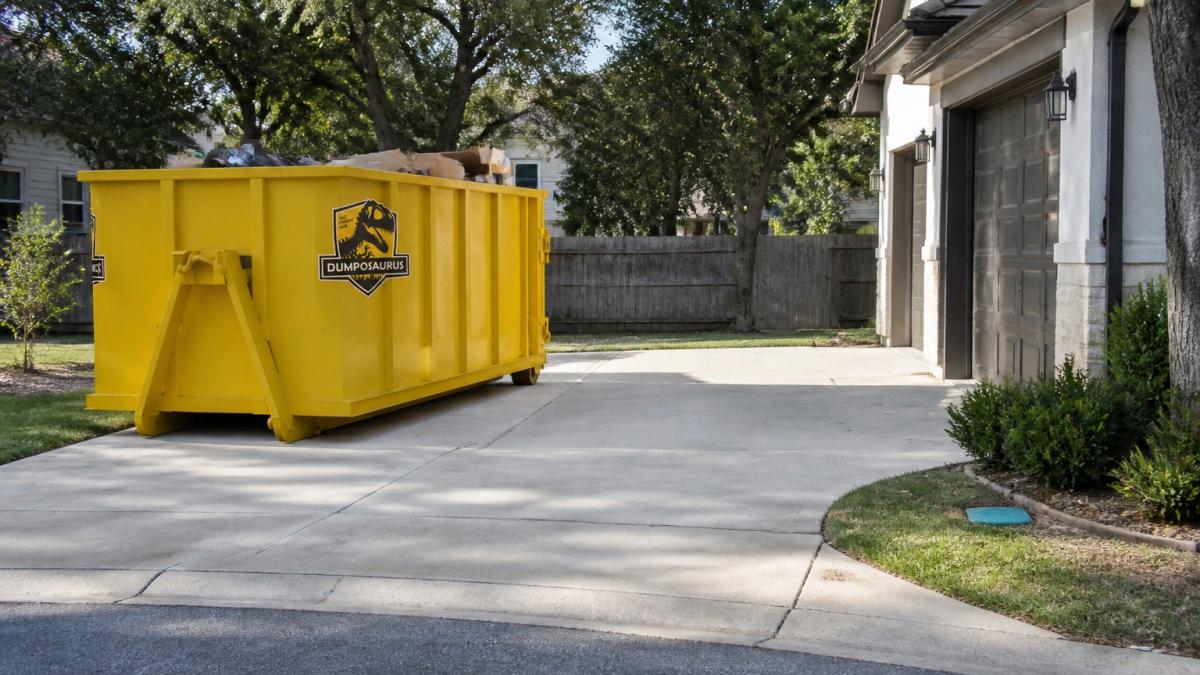
Proper placement ensures safety, prevents property damage, and keeps your project moving smoothly. Before the dumpster arrives, take time to prepare your driveway and property.
Placement and Driveway Safety
Position the dumpster on a flat, level surface away from overhead power lines. Your driveway works well if it’s structurally sound.
Clear the delivery area of vehicles, obstacles, and debris. The delivery truck needs a straight path with enough turning radius. Remove parked cars from the driveway and ask neighbors to do the same if the truck needs extra space.
A driveway-safe dumpster from Dumposaurus Dumpster Rental Austin uses weight distribution designed to minimize pressure on residential surfaces. Still, existing damage or poor soil conditions can be aggravated. Honest conversation about your driveway condition helps your provider recommend the safest approach.
Permits and Local Regulations
Austin and surrounding Central Texas areas have specific rules about placing dumpsters on private property. Most residential dumpsters placed entirely on your own driveway don’t require a permit. However, if the dumpster extends into a right-of-way, alley, or public street, a permit becomes necessary.
Contact your local city or county planning department if you’re unsure. Many providers, including Dumposaurus Dumpster Rental Austin, can advise whether your specific placement needs a permit. Securing permits before delivery prevents delays and keeps your project legal.
Accepted and Prohibited Materials
Understanding what goes in your dumpster prevents contamination issues, disposal problems, and potential fines. Most dumpster rental service providers accept common renovation and household debris: drywall, flooring, wood, metal, appliances, and general household waste.
Prohibited materials typically include hazardous substances: paints, solvents, batteries, electronics, tires, and asbestos-containing materials. These items require special disposal and cannot go in standard landfills.
Ask your provider for a complete list of accepted and prohibited materials before you start loading. Mixing prohibited items into a dumpster can result in rejection at the disposal facility, delays in pickup, and additional charges.
Fast Delivery, Pickup, and Rental Flexibility
Projects rarely follow schedules perfectly. You might finish early or need extra time. A responsive dumpster rental service accommodates these changes without penalty or excessive fees.
Same-day or next-day delivery keeps your project on track. If you call Monday morning and need a dumpster by Tuesday, reliable providers make that happen. Dumposaurus Dumpster Rental Austin prioritizes fast delivery to minimize project delays.
Flexible rental periods matter equally. If your renovation finishes three days into a seven-day rental, you shouldn’t pay for four unused days. The best providers allow early pickup without charging extra.
The difference between a good dumpster rental service and a great one often comes down to flexibility. Life happens. Projects run long or finish early. A provider that adapts to your actual timeline, not just their standard terms, earns your loyalty.
Real People, Real Support: Customer Service That Shows Up
Many waste management companies route calls through automated systems or regional call centers.
Dumposaurus Dumpster Rental Austin operates differently. You call and speak with someone who knows Austin, knows your neighborhood, and can make decisions on the spot.
Real support means honest answers about your dumpster size, placement concerns, and timeline. It means a provider who admits if something goes wrong instead of making excuses.
Choosing a reliable dumpster rental service means finding a provider who combines transparent pricing, dependable delivery and pickup, and genuine customer support. Dumposaurus Dumpster Rental Austin delivers on all three.
Frequently Asked Questions
What factors make a dumpster rental service reliable?
Reliability means showing up on time, honoring your rental period without surprise extensions, providing transparent pricing upfront, and being reachable by phone when you need help. A dependable dumpster rental service delivers on its promises, same-day or next-day delivery when promised, quick pickup when your project finishes, and no hidden fees beyond what you agreed to. Ask about their track record with on-time pickups and whether they answer customer calls directly rather than routing you through automated systems.
How do I choose the right roll-off dumpster size for my project?
Start by estimating the volume of debris. A 10-yard dumpster works for small cleanouts and minor renovations; 15 to 20-yard sizes suit kitchen or bathroom remodels and larger junk removal; 30-yard dumpsters handle full-home renovations and construction sites. If you’re unsure, describe your project to your rental company, most can recommend the right size based on the type and amount of waste. Choosing too small means overage fees; too large wastes rental money. A good rental service will help you estimate correctly at no extra cost.
What’s included in a dumpster rental cost estimate, and what hidden fees should I watch for?
Your dumpster rental cost estimate should include the base rental fee, delivery, and pickup. Ask whether landfill or disposal fees are included or charged separately. Confirm whether your rental period (typically three to seven days) allows free extensions if your project runs long, or if overage days cost extra. Watch for undisclosed admin fees, fuel surcharges, or overage charges if the dumpster exceeds weight limits. Transparent providers itemize all costs upfront so you know exactly what you’re paying.
Do I need a permit to place a dumpster on my driveway in Austin?
Placing a dumpster on your private driveway typically does not require a permit in Austin. However, if the dumpster extends into the street or public right-of-way, a permit from the City of Austin is usually required. Your rental service should clarify this during booking and help you understand local rules. If you’re unsure about your property’s layout or local regulations, ask your rental company, they work with local codes daily and can advise whether a permit applies to your specific situation.